The Christian life is a journey of the lost heart—the lifelong search to be reunited with the God in whose image we were created and, along the way, to recognize that same divine image in one another.
Looking back, I can see a Golden Thread running through my own journey, winding through music and business, social justice, mercy and grace, ordained ministry and now this season of discernment. I haven't always known where it was leading, but I have learned to trust that it is there.
My first experience of God came as a small child at Trinity Episcopal Church in Morgan City, Louisiana, a tiny parish of about thirty-five people. Trinity taught me what “Trinity” meant long before I had theological language for it: a God who is loving, liberating, and life-giving. I simply knew God was there—in the music and worship, in beauty and mystery, and among those thirty-five people gathered around an altar. Music was one of the first languages through which I encountered the Divine, and it remains so today.
I keep returning to the extraordinary claim of Genesis 1:27: “So God created humankind in his image.” If every human being bears the image of God—and I believe with all my heart that we do— then every human encounter is also a divine encounter. For me, that is profoundly incarnational. In Jesus Christ, God takes on our humanity and draws near. God does not remain at a safe distance, and neither can we. The journey toward God inevitably leads us toward one another.
For twenty-five years, much of my journey took place in the business life of the Church, work I never experienced as separate from ministry. With degrees in Marketing and Management and International Finance from the University of Houston, I worked in church business administration, including formative years at Christ Church Cathedral in Houston, with particular expertise in capital campaigns and building projects.
That work taught me to understand institutions and tell their stories, steward resources, build consensus, and help communities imagine futures they cannot yet see—and then figure out how to get there. Robert Greenleaf's “Servant Leadership,” and Ken Blanchard's “Lead Like Jesus” gave me foundational language for something I had already begun to learn: leadership isn't about being at the top; it is about using entrusted authority to make it possible for others to do what God has given them to do. That doesn't mean I am afraid to make a decision. I'm not. But authority has a purpose, and that purpose isn't the person who holds it.
My encounters with the HIV/AIDS crisis, particularly the ministry of Omega House, taught me something else: sometimes there is nothing we can fix, no answer we can offer, no program that will make everything right. Sometimes what is entrusted to us is simply to draw near and remain.
At Brite Divinity School, where I received my M.Div. in 2011, convictions formed through experience found deeper theological expression. Social justice isn't something added to the Gospel; it flows from what we believe about God and one another. If the person before me bears the image of God, I cannot be indifferent when that person's dignity is diminished.
The Baptismal Covenant has become something of a rule of life for me: seek and serve Christ in all persons; strive for justice and peace; respect the dignity of every human being. I return to those promises daily because they ask a fairly uncomfortable question: Is what I profess at the altar visible in the way I encounter the world?
I believe deeply in the Real Presence of Christ in the Eucharist, and I have come to understand that it makes a claim upon the people gathered there. If Genesis is true, every one of us carries something of the image of God—a God-piece, if you will. But I don't have all of it, and neither do you. We need each other even to begin to imagine what God might look like. I need the person very different from me just as surely as the person with whom I feel at home. Maybe I need that person more. The Eucharistic table gathers us together and sends us looking for the pieces of God we haven't yet learned to see.
In early 2020, just before COVID-19 changed the world, I was called as the fifth Rector of The Episcopal Church of St. Thomas the Apostle in Dallas, a congregation with a remarkable history at the intersection of faith and justice—from racial integration and ministry during the HIV/AIDS crisis to marriage equality. Our years together have required us to ask what that history means now and, more importantly, who God is calling us to be.
One fruit of that work has been a renewed articulation of our mission and vision. We call ourselves “The Doubters of Great Faith,” because we have come to believe that doubt is not the opposite of faith; distance is. Doubt can question, wrestle, even deepen faith. Distance keeps us safely removed—from God, one another, and people whose lives we might prefer not to see. And so our mission is simple: “Bringing You Close Enough to Care.”
I believe proximity changes us. Categories acquire names and faces. Stories are heard. Relationships happen. Sometimes the person I thought I was going to serve reveals something of God that I desperately needed to see. God comes close enough to us to care. The Church is called to do likewise.
I love finding ways to invite people into serious theological work without making it unnecessarily serious. Something as playful as “Hymn-a-Palooza” became an exploration of the spiritual autobiographies we carry in our music. More recently, Romans 12 invited us to consider Paul's appeal to “present your bodies as a living sacrifice”—stewardship not simply as presenting something that belongs to us, but as presenting ourselves.
Those words have become deeply personal. I realize this is what I have been trying to do throughout the journey: present myself—gifts and limitations, mind, body, heart and spirit—for whatever work God places before me. Not perfectly, and not once and for all. A living sacrifice has the inconvenient habit of getting up off the altar! So we present ourselves again. And again. The places have changed, but the offering remains:
Here I am. What would you have me do?
Classical music and the fine arts feed me deeply. I find God in architecture and nature, although, quite frankly, I have come to expect to find God just about everywhere. Travel, exercise, friendship, conversation, laughter, and beauty give rhythm to my life. I have become less interested in deciding where God ought to be and more attentive to discovering where God already is.
And so here I am.
I can see the Golden Thread much more clearly looking backward than looking ahead. My deepest desire in this discernment is simply to continue presenting myself to God—to be where God is calling me to be, doing the work God has given me to do, among the people with whom God has called me to share it. I trust the thread that has led me this far, and I trust God with where it leads next.
And I am curious about the Golden Thread already running through the Episcopal Diocese of Northwest Texas—across great distances, through its congregations and communities, through faithful people and the particular places they call home. What might God be weaving there? And might the thread I have followed all these years, for this next season, be woven into theirs? Perhaps that is where discernment begins—with faith, curiosity, and a willingness to follow the thread and discover what God may be weaving.
The journey of the lost heart is, after all, the journey we are all making: learning to recognize the God who has been present all along, discovering that God in one another, and finding the courage and grace to follow the Golden Thread, wherever it leads.
Why I Feel Called to Discern with the Diocese of Northwest Texas
You say it yourself, so eloquently, in your beginning; if I am to understand you, the place to start is with wind, the very breath sweeping across the Llano Estacado, “the staked plains.” That wind, the very breath of God, at once gentle, sometimes violent, is itself a mix of contradictions, never beginning, never ending, Alpha and Omega, those points where it meets you on the plains, staked forever as holy incarnations, the places where you meet God, the God who loves you to, loves you in, and loves you through, all that desert life holds.
The curious, grateful thing about wind is that no one owns it. Wind did not start on the staked plains or end there. The very same breath blew forward across the bayous and swamps of south Louisiana, deep into the heart of Acadiana. It was there that, in spite of all signs to the opposite, I myself found the open arms of God breathing love and life through tiny little Trinity Episcopal Church, in Morgan City, Louisiana. For it was there that I met the God of acceptance and embrace, not the God of judgment and rejection. Although it was never specifically enunciated this way, what I found, through the doing of Anglican theology, in that blessedly tiny, shamelessly bold parish in the swamp, was Grace.
“Twas Grace that taught my heart to love, and Grace my fears relieved…”
The Grace that rides on wind is so incredibly intoxicating that I have devoted my entire life to this calling, this crazy institution we call The Episcopal Church. For it was only by Grace that I got to meet this God; it is only by Grace that I survived; it is only by Grace that I am here and breathing. Should not everyone have the same opportunity to meet this God?
How do I do that? How do we do that? For Episcopalians like you and me, it is discernment. What would God call us to do? What is the next right thing? What are all the collections of “next right things” that compel Grace forward?
What was it about the doing of Anglican theology (scripture, tradition, reason; our beloved three-legged stool), living in the questions rather than always having the answers, that made those 30 people in the swamp so well-equipped to be God’s Grace personified? Living in the question, rather than always having to have every single answer opens up the spaces between the concrete places of the world for Grace to blow through.
The joy of living in the question is that it makes space for, quite literally, everyone. The frustration of living in the question is that it makes space for, quite literally, everyone. It is Grace, when everyone is there.
How do we get everyone to Grace?
Two pillars have emerged as hallmarks of my ordained ministry, two guiding emphases, the baptismal covenant, and the unique Anglican notion of “real presence.” The baptismal covenant spells out, in no uncertain “doing” terms the actions that each of us, through our baptismal ordinations, are expected to carry out if we are to bear the identity of Jesus Christ. The five questions are as simple as the Great Commandment (love God, love neighbor, love self), and as complex as integrating the Great Commandment into the broken world all around us. The baptismal covenant forces us to confront our own brokenness and the brokenness of the world, and it guides the way to Grace. It is why I strongly recommend my parish to pray it twice every single day – once in the morning as aspiration, and once in the evening as evaluation. It is what forms us into the identity of Jesus Christ.
Secondly, I am convinced that “real presence” is our unique Anglican secret sauce, the mysterious, mystical way that we incarnate Jesus Christ every single time we gather, two of us, ever increasing to all, in our God-inspired liturgies. We take everything that we are, everything that we have, everything that we want to be, everything that the wind blows in, across the waters of the baptismal font, right up onto the altar, say some words over it, break it, and give it back to take out into a broken and hurting world! That is nothing short of miraculous!
All of that is hard work, doing the baptismal covenant, showing up and being real presence.
It is hard work, and yet so necessary, because each of us, all of us, is so very similar, and yet so completely unique. Each one of us, all of us, bear the imprimatur, the Imago Dei, the image of God. If we have any hope of knowing the God of our Creation, we must look at ALL of those little God-pieces around us, the ones that look like us, and the ones that do not. It’s the ones that do not that are the challenge. The ones that do not look like us, or smell like us, or sound like us, or believe like us, or vote like us, those are precisely the ones that we are needing to complete the picture.
We do not do this work to save them or to save us. (We have a savior, and it is not us!)
We do this work to introduce them and us, all of us, to Grace.
I do not believe bishops are called primarily to manage institutions from a distance. I believe bishops are called to presence: to listen carefully, travel faithfully, strengthen relationships, encourage courage where exhaustion has settled in, and help congregations rediscover what God is already doing among them. Some communities need reassurance. Others need permission to imagine again. Most need someone willing to stand beside them long enough to know the difference.
As I read about the Diocese of Northwest Texas, I see a people stubborn enough to keep gathering across great distance, to keep praying, laughing, serving, and loving one another in the wide-open spaces of West Texas. I see congregations committed to practical love with “work boots on.” I see clergy collegiality rooted in friendship rather than competition. I see a diocese that understands faithfulness not as grandeur, but as endurance.
And THAT is why I feel called to discern with you.
Because in a world increasingly shaped by fear, fragmentation, certainty, and division, I see in Northwest Texas a different possibility: communities still willing to make room for GRACE to move.
Grace is the necessity that resides in the tension of justice and mercy. Grace gives elasticity to the ever-ongoing dynamic pull of justice and mercy. Grace makes listening possible. Grace allows people who might otherwise fear one another to become the Body of Christ together.
And I would be honored to walk into that West Texas wind with you!

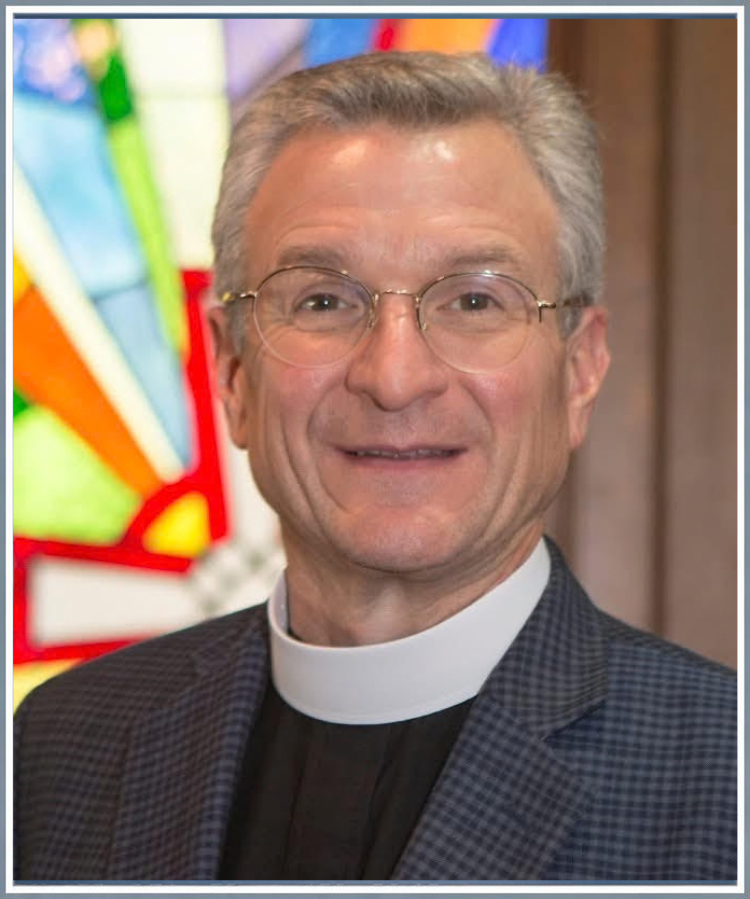 The Rev. Christopher B. Thomas, MDiv, MBA